Thanksgiving is built around food, and that can feel like a lot of pressure when you live with diabetes. The good news: you do not need a perfect plate, just a plan. A few simple habits can help you enjoy the meal and keep your glucose steadier.
Key takeaways
- Fill about half your plate with non-starchy vegetables, a quarter with protein and a quarter with starchy foods.
- Eat your usual meals earlier in the day rather than skipping them to "save up".
- Take one small plate of favourites, then step away from the table.
- Check your glucose more often than usual, and consider a walk after the meal.
Start with the plate method
The CDC's holiday guidance uses the plate method: about half the plate non-starchy vegetables (green beans, salad, roasted Brussels sprouts), about a quarter protein (turkey is a classic fit), and about a quarter grains or starchy foods, with water or a zero-calorie drink on the side.
On Thanksgiving, the starchy quarter is where stuffing, mashed potatoes, sweet potatoes, rolls and cranberry sauce all compete. You do not have to skip any of them. Choosing two or three you truly love, and taking small portions of each, keeps the carbs manageable without feeling deprived.
Don't skip meals to save room
It is tempting to skip breakfast so the big meal "fits". Diabetes organisations generally advise against this, because arriving very hungry can lead to larger portions, and for people on glucose-lowering medicines, long gaps can add to the risk of low or unpredictable glucose. Eat your normal breakfast and any usual snack, ideally with some protein and fibre.
Buffet and table habits that help
- Scan first. Look at every dish before you serve yourself, then choose favourites.
- Use a small plate and make one trip, then move away from the food so you are not grazing.
- Watch hidden carbs. Gravies, glazes, casseroles with sweetened toppings, and sweetened beans or sauces can carry more sugar and starch than they look.
- Go slowly. Eating gradually makes it easier to notice fullness.
- Bring a dish. Offering to bring a vegetable side or a lighter dessert guarantees at least one option that suits you.
Dessert and drinks
A small slice of pie can fit into a meal. Many people find it easier to plan dessert as part of the meal's carbs rather than adding it on top of a full plate. Sweet drinks, cider and cocktails add carbs quickly, and alcohol can raise the risk of low glucose later, sometimes overnight. For more on that, see our guide to alcohol and diabetes.
Estimating carbs when the food is homemade
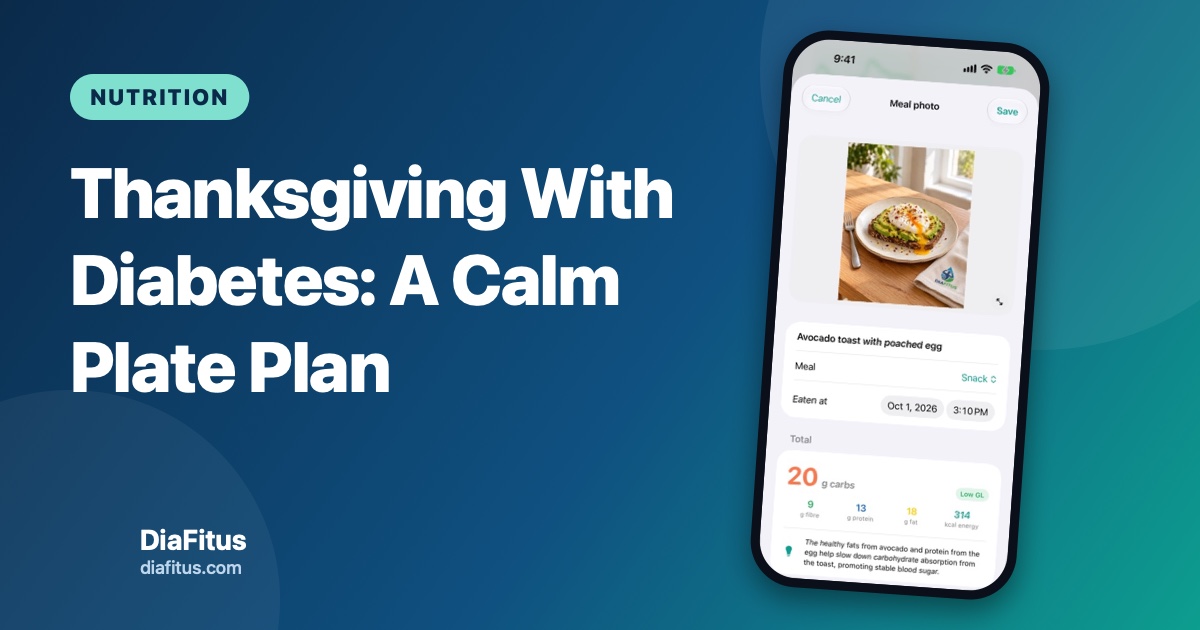
Homemade dishes have no label, so estimates get fuzzy. Photographing your plate and logging it can help you spot patterns afterwards. Our post on estimating carbs from a photo explains how a meal scan works and why any estimate should be treated as a rough guide, not a measurement. Rich, high-fat dishes can also cause a delayed glucose rise, which we cover in Pizza Night and Blood Sugar.
Move after the meal
The CDC suggests getting active with family and friends, for example a walk after the meal. Even a short, easy stroll may help your muscles take up glucose. If you take insulin or a sulfonylurea, check your glucose first and keep fast-acting carbs with you, since activity can lower glucose. Our post on post-meal walks has more detail.
Check your glucose
Holiday meals are different from your normal routine, so a bit more checking can be reassuring, whether you use fingersticks or a CGM. Notice what happened after each part of the meal and use it to plan next year. If you use insulin, talk with your diabetes care team ahead of time about how to handle a larger or later meal; this article cannot give dosing advice.
Be kind to yourself
One high reading after a holiday dinner is not a failure. Go back to your usual routine the next day, drink water, and carry on. The aim is a good day with people you care about.
This article is educational and is not medical advice. DiaFitus is not a medical device and does not replace your care team.