Not all workouts treat your glucose the same way. Steady cardio often brings glucose down during the session, intense intervals can push it up briefly, and strength training tends to have a gentler effect. Knowing the pattern can help you plan, with your care team, for fewer surprises.
Key takeaways
- Steady aerobic exercise (brisk walking, cycling) usually lowers glucose during the session, so it carries a real low-glucose risk for people on insulin or sulfonylureas.
- High-intensity intervals and heavy lifting can raise glucose temporarily because of stress hormones, then glucose may drop later.
- A mix of aerobic and resistance training fits what the American Diabetes Association (ADA) recommends for most adults.
- Your own CGM or meter data is the best guide to how you respond.
Steady aerobic exercise: the glucose lowerer
Walking, easy cycling and swimming use glucose steadily, and muscles become more responsive to insulin. For many people glucose trends down during and after the session.
That is helpful for people with type 2 diabetes who are not on glucose-lowering medicines that cause lows. For people using insulin, it is the type of exercise most associated with going low, especially if insulin is active in the body at the start.
High-intensity intervals: up first, sometimes down later
Short, hard efforts trigger adrenaline and other hormones that tell the liver to release glucose. Because of this, glucose can hold steady or even rise during and just after intense intervals, even in people with type 1 diabetes.
A small 2025 randomized crossover trial in Sports Health compared elastic-band interval training with continuous moderate cardio in 39 active men with type 1 diabetes. Glucose stayed steadier with the intervals, and fewer people dropped into low glucose during the session. The study was small, included only men and tested a single session of each type, so it cannot tell us what is best for everyone.
The catch: glucose can fall hours later as muscles refill their energy stores, sometimes overnight. Intervals are not automatically "safer"; the risk simply shows up at a different time.
Strength training: a gentler, longer benefit
Lifting weights or using bands usually moves glucose less dramatically in the short term. Heavy sets may cause a small rise, and the longer-term benefit comes from building muscle, which gives your body more tissue to take up glucose. If you are new to it, see our beginner's guide to strength training with diabetes.
What guidelines recommend
The ADA Standards of Care recommend that most adults with diabetes get at least 150 minutes a week of moderate-to-vigorous aerobic activity, spread over at least three days, plus two to three resistance sessions a week on non-consecutive days. Interval training can count toward the aerobic goal for people who are already fit and have their care team's approval. A 2017 international consensus statement on exercise in type 1 diabetes also covers all three types and notes that the best mix for long-term outcomes is still not fully clear.
In practice, that means the best workout is often a combination you will actually keep doing.
Practical ways to plan, safely
- Check before you start. Know your glucose and which way it is heading. Your care team can give you personal targets.
- Carry fast-acting carbohydrate for any session, especially cardio, if you use insulin or a sulfonylurea.
- Watch the hours afterwards. Delayed lows can follow any type of exercise, so check again later and before bed.
- Change one thing at a time. Try a new workout type on a day you can monitor closely, and note the result.
- Talk to your care team before adding intense exercise, particularly if you have complications such as eye or kidney disease.
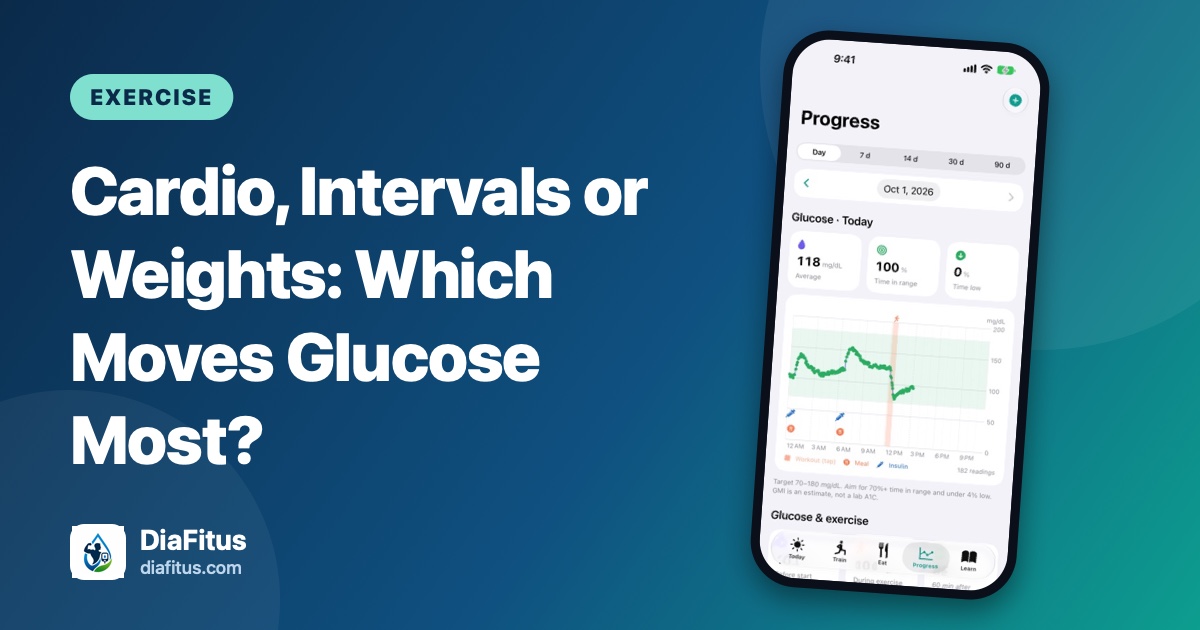
Logging workouts next to your glucose makes these patterns visible. In DiaFitus you can see what each workout does to your glucose and compare cardio, strength and interval days over time. DiaFitus is a wellness tool and does not replace your CGM alarms or medical advice.
The bottom line
Cardio, intervals and strength each have a different glucose signature, and each has a place. Learn your own pattern, build in safety habits, and ask your diabetes team how to adapt your plan.