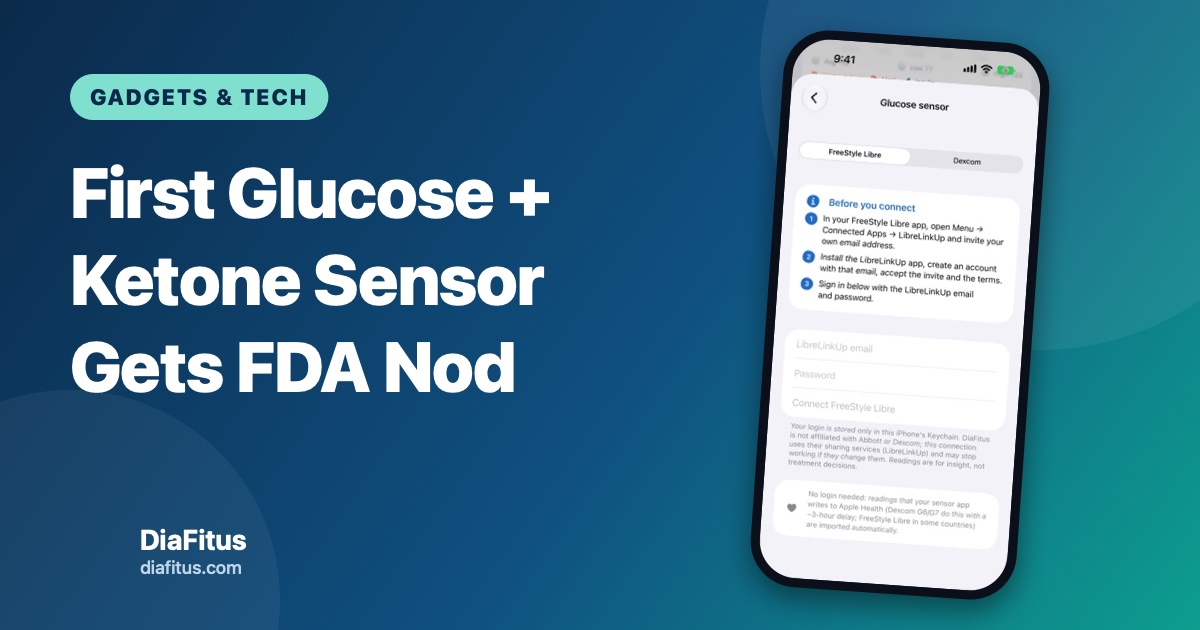
In August 2026 the U.S. Food and Drug Administration authorized Abbott's Libre Duo 10 Day, a wearable sensor that tracks both glucose and ketones in one device. Abbott describes it as the first system of its kind, and it is a notable step for diabetes technology because ketones have until now been checked mostly with urine strips or finger-stick meters.
Key takeaways
- Libre Duo 10 Day measures glucose and ketones continuously and can be worn for up to 10 days.
- Abbott says it is the first system to meet both the FDA's iCGM standard (glucose) and the new iCGK standard (glucose plus ketones).
- It is aimed at people aged 2 and older with diabetes, especially those at higher risk of raised ketones, such as people who use insulin or certain glucose-lowering medicines.
- A U.S. launch is planned for later in 2026, so availability and pricing are still to be announced.
Why ketones matter
Ketones are acids the body makes when it burns fat for fuel. A small amount is normal. When there is too little insulin, ketones can build up and, together with high glucose, may lead to diabetic ketoacidosis (DKA), a serious emergency. People with type 1 diabetes, and some people taking SGLT2 inhibitors, are often taught to check ketones when glucose is high or when they are sick.
Today that check usually means a urine strip or a blood ketone meter, and it only happens when someone remembers to test. A sensor that shows ketones next to glucose could make changes easier to spot, which is why this authorization has drawn attention.
What was authorized
According to reports on the announcement, the FDA granted the system a De Novo authorization after an earlier breakthrough device designation. Six studies with more than 600 participants supported the decision. The sensor is worn for up to 10 days and is intended for people aged 2 and older.
Abbott also expects the sensor to connect with some automated insulin delivery systems: Beta Bionics' iLet and Sequel Med Tech's twiist by the end of 2026, and Insulet and Tandem devices in 2027. These are company expectations, not guarantees, and timelines can change.
Important limits
Both the manufacturer and the FDA stress some cautions. The system may not detect every severe glucose or ketone event, and ketone readings should always be read together with glucose values and how a person feels. A sensor reading is one piece of information, not a diagnosis.
- Follow your care team's written plan for high glucose and ketones, including when to seek urgent help.
- Do not change medicines or insulin based on a sensor trend without medical advice.
- If you have symptoms such as vomiting, stomach pain, fast breathing or unusual drowsiness, seek emergency care rather than waiting on a number.
What this means for you
If you live with type 1 diabetes, or take an SGLT2 inhibitor, ask your diabetes care team whether continuous ketone sensing could suit you once it is available, and whether insurance is likely to cover it. If you already use a CGM, nothing changes today.
If you want a refresher on how glucose sensors work, see our guide to CGM basics, or read how sensors pair with pumps in automated insulin delivery, explained. For sick-day planning, see the sick day guide.
The bottom line
Continuous ketone sensing is a new capability for people with diabetes, but it is early. Watch for launch details from Abbott and talk with your care team before relying on any new device. DiaFitus is not affiliated with Abbott, and this article is for education only, not medical advice.